In this guide I map out a realistic 7–10-day Northern Tanzania safari itinerary that takes in the big 4 – Serengeti National Park, Ngorongoro Crater, Tarangire and Lake Manyara without turning your trip of a lifetime into a race between game drives. I break down the advantages of a private safari vs a group tour and recommend a private safari company that we found to be excellent and that doesn’t cost the Earth!
Whether you’re dreaming of the Great Migration, or simply want to see East Africa’s amazing wildlife, this Northern Tanzania safari guide will help you plan smarter, travel better and make the most of every unforgettable moment.

Preparing for a Northern Tanzania Safari
If you have never been on a safari before, or never been on one in Tanzania, then you probably have a lot of questions like we did. We were unsure about how much money to take, Visa application, vaccinations, what to pack and so much more. There was so much information I wanted to include in this section that I decided to write a whole separate blog post about it. Here is a link to my post on everything you need to know before you go on a safari in Tanzania.

Northern Tanzania Safari – Private Vs Group
Trying to decide which safari company to go with is a big decision. Firstly, you have to decide whether to go with a big tour company or with a private tour company. We decided a private tour company was the right choice for us. We were not travelling with children or a big group. Just the two of us.
Advantages of a Private Northern Tanzania Safari
- Small group size obviously! In fact, on our safari it was just the 2 of us, plus the guide, in the safari vehicle for the whole safari. We saw some vehicles with 7-8 people in them. We even saw buses on safari full of people. Buses were definitely not for us, we would rather pay a little more.
- Craft your own itinerary. After discussions with our safari company, we were able to add, omit or alter some destinations to suit our needs.
- Personalized attention. Our guide asked us straight up what we were most excited to see and do and then tried very hard to make sure we were satisfied. With just our needs to take into consideration, our guide was able to customise our game drives.
- Better able to listen and learn about what we were seeing from our guide. We were able to ask whatever questions we wanted without annoying or boring other guests.
- Comfort. I loved being able to get up and move about the cabin of the jeep, stand on seats (I am rather short) and move to other seats if I wanted to. We were also able to schedule stops whenever we wanted or needed…including the use of the bush washroom, which would have been a little embarrassing with other people on board.

The Cost of a Private Northern Tanzania Safari
Then the price needs to be considered…. the price range varies dramatically! Some of our initial enquiries produced quotes around the $10 000USD mark! Converted to Australian dollars, that’s one very expensive safari…. and that doesn’t include flights!
On the recommendation of a colleague, we looked into Makasa Tanzanian Safaris. Straight away, the price was more budget friendly at around half the cost of the other quotes for a private safari. We were cautious though, not wanting to sacrifice comfort for cost.
We did our research and, in the end, we were very pleased with the level of service and accommodation we received throughout our trip. Another thing we loved about Makasa is when you book your safari you are allocated a contact and they are your contact for the entire lead up and duration of the trip. Our contact was Zara and she was wonderful.
When to go on a Northern Tanzania Safari
To See the Great Migration
Seeing the Great Migration on a Northern Tanzania safari isn’t as simple as turning up and ticking it off your list. The herds are constantly moving in search of fresh grazing, guided by rainfall rather than a fixed schedule – so timing is everything, and even then, nothing is guaranteed.
You might spend several days in the northern Serengeti hoping to witness a wildebeest river crossing, only for the herds to remain on the opposite bank or move on before they reach the water.
While dramatic river crossings in the Northern Serengeti (July – October) are the most famous, they’re also the most unpredictable.

To See Highly Active Predators
Earlier in the year, from January to March, the Southern Serengeti and Ndutu region offer a different but just as rewarding spectacle during the calving season. Thousands of wildebeest are born and predators are highly active.
April and May bring heavy rains, making travel trickier, but not impossible. The landscapes are greener and the crowds are fewer.
Best Overall Time to go on a Northern Tanzania Safari
For a classic Northern Tanzania safari with strong wildlife viewing overall, the dry season from June to October (which is when we went) is your safest bet.
No matter what time of the year you choose to go – flexibility, a good guide and a little luck will always play a role.

Itinerary for a Northern Tanzania Safari
One of the key benefits of a private safari is that you can customise your own itinerary. Of course, your safari company will suggest an itinerary based on how many days you wish to be on safari and the destinations you are most interested in. You can then tweak the itinerary to suit your own needs. For example, we wanted to minimize time spent transiting from one destination to the next, so we reversed some of our itinerary and included a flight out of the Serengeti.
The following is the itinerary that we followed and we loved every minute of it.
Moshi (1 night)
A lot of people kick off their Northern Tanzania safari in Arusha, which is close to the Ngorongoro Crater and has an airport. However, we chose to fly into Kilimanjaro airport and start our Tanzanian adventure in Moshi. A lot of hikers tackling Mt Kilimanjaro will fly into this airport and base themselves in Moshi.
Our reason for wanting to see Moshi is a personal one, my husband’s father was born there! Just like my motivation for visiting Zimbabwe years ago, we wanted to see the place in which our parents entered the world.
We were lucky enough to get our first brief sighting of the mighty Mount Kilimanjaro in Moshi! We managed to get a glimpse before the cloud covered it. Every other day of the trip it was shrouded in cloud, with the summit being hidden from view.

Where to Stay in Moshi
Our accommodation in Moshi was surprisingly good. I wasn’t expecting much because the drive through town revealed very basic infrastructure. Moshi is full of character, if a little rough around the edges 😁. The Brubru Lodge was lovely, located near Shanty Town, which is where most of the ex-pats choose to live. In Australia, the word Shanty Town conjures up a different image, so I was very happy when we pulled into the driveway and saw the lodge for the first time.

Our room was very spacious and the bed comfortable. We enjoyed lying beside the pool (the water was a little too fresh for me) and having a sundowner in the alfresco bar/restaurant area at the back of the lodge.


Our Makasa Safari contact, Zara, was in town and generously picked us up and showed us around town. She also took us to an ATM to withdraw some local currency and joined us for dinner at one of her favourite restaurants, the Jackfruit Cafe.

It was a wonderful start to our time in Tanzania! No late nights for us though, we were getting picked up after breakfast to begin our drive out to the Amini Life Original Maasai Lodge for our night with the Maasai.
Shopping in Moshi
On the drive out of Moshi, our driver, Goodwin, asked us if we would like to see an art gallery in town. You know I love my art, so it was a big yes from me. The Blue Zebra is a large art gallery, housing stunning pieces of art using multiple mediums. There was even a jeweler onsite that specialized in Tanzanite…hello!
Tanzanite
My one purchase I wanted to make in Tanzania was a pair of Tanzanite earrings. Tanzanite is an exceptionally rare gemstone found only in a small area near Mount Kilimanjaro in Tanzania. It is prized for its shifting blue-violet hues, and I could not think of a more fitting souvenir.
I was however, about to learn my first lesson in Tanzania, and that is you are expected to haggle – the price tag is only a suggestion. I probably could have got those Tanzanite earrings for a lot less had I known BEFORE I squealed in delight at seeing them! Never mind, I love them, even if it was an expensive lesson to learn.

My husband purchased a painting and I took photos of some of the artworks that have inspired me to pick up my graphite pencils and start sketching again.


Back in the car with our purchases, on we traveled to the Maasai!
A Night with the Maasai (1 night)
Our second night in Tanzania was spent at the Africa Amini Life Original Maasai Lodge, about a 1.5-hour drive from Moshi.
This is where I really felt our Tanzanian adventure was beginning. On the road out to the Lodge, we passed a group of Maasai boys all dressed in black and moving as a group with purpose, to some unknown destination. Goodwin explained that these boys were called Moran and are in a transition phase moving from boyhood to warriorhood. For a short period following circumcision, Maasai boys aged between 12 and 16, dress in black, paint their face white and learn what it means to be a warrior.

A Friendly Welcome
Shortly after this encounter we arrived at the Lodge. We were greeted by beautiful singing and a welcome drink. If you know a little about the Maasai culture, you will know they traditionally drink blood from their cattle. So it was with trepidation, that I accepted a dark red liquid offered to me. It smelt sweet, looked too thin to be actual blood so I cautiously sipped it – it would be rude not to! The gathered welcome party thought it was hilarious, as the taste of blackcurrant juice hit my tongue and visible relief spread across my face.

Our Hut
The Maasai proved to be wonderful hosts, our every need was seen to. We were escorted to our ‘hut’ which was on the rise of a hill overlooking the vast plains below. The hut was gorgeous, comfortable and private. We spent some time relaxing and taking the in the view and testing out our new binoculars. (Highly recommend the Tasco 10 x42 Essentials binoculars – compact for travel and voted best budget binoculars by Escape magazine).


The facilities at the lodge were lovely including a spa and gorgeous pool area – again a little too cool for me to get in.

Activities with the Maasai
After lunch, we were lead on an easy and very informative nature walk by one of the Maasai warriors. It was during this walk that we had our first close up wildlife encounter. A pair of giraffes walked casually right in front of us! They were so close …. it was amazing!


In the afternoon, guests were treated to an interactive spear throwing demonstration, which was a lot of fun. I had a go, needless to say, I missed the mark. This was followed by singing and dancing, and again the guests are encouraged to join in. I loved seeing the Maasai men doing their jumping during the dancing. The warrior that took us on our walk earlier in the day was unashamedly the best at jumping. 😁


We slept deeply that night, dreaming of what was to come.
Tarangire National Park (1 night)
Our driver and our Makasa guide for the rest of our safari, Kelvin, picked us up at 7.30 am for the 3.5-hour drive to our first game drive destination – Tarangire National Park. The spacious Landcruiser was very comfortable, and we had the whole vehicle to ourselves, so we made ourselves at home.

Upon arrival at the park entrance, Kelvin took care of all the paperwork, while we used the opportunity to stretch the legs, use the bathroom and learn a little more about the park from the information boards.

Tarangire National Park Game Drive
Tarangire National Park covers an area of approximately 2,850 square kilometres and is well known for its large elephant populations and giant Baobab trees. We saw both of these as well as an abundance of birdlife, zebra, antelope and a cute colony of Mongoose.


Keep Your Eyes on Your Lunch!
We stopped for lunch at a very popular picnic spot overlooking the Tarangire River. Tables were prime real estate, but we managed to find a spare one. Kelvin spread a tablecloth and set out our packed lunches with a warning – keep your eyes on the resident Vervet monkeys, they will steal any food they can get their hands on. It was actually entertaining watching them at work. As soon as someone took their eyes off their lunch for a second, they were there!
The Vervet monkeys are quite remarkable; their family jewels are bright vivid blue! When in mating season they turn even brighter, earning them the nickname of the Tanzanite monkey. 🤣 The picture looks photoshopped but it’s not, that is the actual colour of his balls!


The biggest treat though, was seeing our first lions! We almost drove straight past them asleep up in some branches of a half-fallen tree. The tree climbing lions are supposed to be famously located in Lake Manyara, but we were so happy to see them here. Our guide also told us that tree-climbing lions are actually found everywhere. 😁
Where to Stay near Tarangire National Park
We left Tarangire National Park with a full camera roll and wonderfully satisfied after our first game drive. Adjacent to the National Park was our accommodation for the night, the Tarangire Simba Lodge. We loved our en-suite ‘tent’, with wooden floor, private verandah, outdoor shower and beautiful African furnishings.


As lovely as the verandah is though, guests shouldn’t venture out of their room after dark without an escort. This was especially true for us as our tent was on the edge of the property and bordered the wild land beyond.
The common areas were where everyone hung out and shared stories of their day game driving. We met a group of young men on a school tour all the way from Australia near my hometown! What are the chances?!? Around the pool or from the viewing platform, made a perfect spot to enjoy a sundowner and watch animals come to drink at the nearby waterhole.

Here are some other accommodation options near the Tarangire National Park.
Lake Manyara National Park (a few hours)
I am glad we added Lake Manyara National Park to our itinerary, and not just because of the wildlife we saw there, but for the fact that it is disappearing! Lake Manyara National Park is nestled between the Great Valley Rift Escarpment, and the alkaline Lake Manyara. The lake is a closed basin with no outflow, so during wet season the lake expands significantly.
See it While you Still Can
In the last 10 years the Lake has grown by more than a kilometre, swallowing sections of the National Park. There was evidence of where the waterline used to be, now underwater, and with the dramatic cliffs of the escarpment bordering the National Park, there are some sections of the park that have become very narrow.
On our visit a section of the road was underwater, and workers were busy clearing another section to serve as the new road. A lot of vehicles turned around at this point, but our most excellent driver, ventured forth. Crossing to the other side, saw us have the whole southern section of the park virtually to ourselves!

Maybe it was the lack of traffic, maybe it was just pure luck, but it was here that we saw what I consider to be the highlight of our safari. We rounded a corner in the road and saw two lionesses casually walking down the road! Kelvin cut the engine and they walked right beside our vehicle, looking up and giving me the once over! Oh, how I wish we had the open safari Jeep during that encounter. It was truly unforgettable!
You could see the lions looking into the trees for a possible meal. Kelvin told us to listen to the monkeys, who were warning each other of the approaching danger. It was so interesting to learn about and observe the animal behaviours.
Other animals spotted on our game drive in Lake Manyara national park were hippos, Blue Monkeys, impala, the rare Crested guinea Fowl and the Southern Ground Hornbill.


Friends I have spoken to, said that Lake Manyara National Park was the least impressive of all the game drives they did in Tanzania. It was definitely the smallest of the National Parks that we drove through but because of our lion close encounter, and the fact that it may not be around forever, it was one of my favourites.
An hour drive from Lake Manyara saw us arrive at our accommodation for the next 2 nights.
Ngorongoro Crater (2 nights)
Where to Stay near the Ngorongoro Crater National Park
Accommodation on the Ngorongoro crater rim can be quite expensive, so we stayed close enough to the National Park entrance, but without having to incur the huge expense. The lovely Hhando Coffee Lodge is located in nearby Karatu on a 15-acre coffee farm that borders the Ngorongoro Crater conservation area. The individual cottages are spaced out around the grounds and ours overlooked the valley below, where it is not uncommon to see passing elephants grazing.
Facilities include a swimming pool and a large dining area. Our favourite position was beside one of the large fireplaces, with a glass of wine, as the sun dipped behind the horizon and the night air became chilly.
We had arrived in the late afternoon so our first night was spent simply relaxing eagerly awaiting our game drive the next day into the Ngorongoro Crater.
If the Hhando Coffee Lodge isn’t available on your travel dates, or if you have a bit more cash to splash, here are some alternative accommodation options on or near the Crater rim.
Ngorongoro Crater Game Drive
This is one of the most popular destinations for game drives on a Northern Tanzania Safari, so the trick is to get to the park entrance nice and early, as they open the gates. Staying nice and close like we were, allowed us to get to the park entrance close to opening time, but there was still quite a line of vehicles already waiting with the same purpose.
A little patience goes a long way and can sometimes be rewarded as we were, with a rare sighting of a large male lion actually positioned up on the crater rim, overlooking his territory below. It was a very Lion King moment!

In a car behind us was a Maasai wearing his distinctive red Shuka cloth. Kelvin noticed and told us that as soon as the lion sees that cloth he will move. Outside the Crater, the lion and the Maasai historically have a tense relationship, with the Maasai killing lions that threatened their herds. Lions must have long memories, because Kelvin was right, as soon as the lion’s gaze landed on the red Shuka, he disappeared.
The wildlife spotting inside the crater was spectacular! We were lucky enough to spot the endangered Black Rhino, albeit from a great distance. This is where binoculars and a camera with a good zoom lens come into their own.

One of my big wishes was to see flamingos. I had told Kelvin this, so he headed straight for Lake Magadi. Even though a lot of the flamingos had migrated to Lake Natron, there were still plenty of them feeding in the lake. Two species were visible, the Lesser Flamingo, which is pinker in colour than the paler, whiter Greater Flamingo. One happy Deb!

Other wildlife highlights included a troop of baboons that hijacked our Landrover for a bit of sport! Kelvin told us they were harmless and just looking to have a bit of fun. What a thrill to have them jumping onto the roof and sitting right in front of us.
As soon as Kelvin started the engine though, they all took off quick smart, as he said they would.
We enjoyed a picnic lunch down on the crater floor and then continued our epic game drive. We saw wildebeest migrating from one side of the National Park to the other, plenty of Zebra, lions, gazelles, and a multitude of various birds.


Did you know that ostriches eat stones? Because they don’t have teeth, they swallow stones that travel to the muscular part of their stomach galled the gizzard. The muscles in the gizzard then grind the stones together to crush food into digestible pieces. I love learning stuff like this!


As the afternoon drew to a close we left the Crater and headed back to the Hhando Coffee Lodge for a second night.
Serengeti National Park (3 nights)
This was the big one! The Serengeti National Park is huge! It is approximately a 4-5 hour drive from Ngorongoro Crater to the entrance of the Serengeti National Park along a section of road that is notoriously corrugated. We had pulled in to get the iconic photo of the park gate when we noticed we had a flat tyre. This is not an uncommon occurrence, and Kelvin had the tyre changed in a jiffy. I’m thinking we were lucky we noticed it outside the National Park and not once we were inside where hungry eyes might be upon us!


It is important to time your entry into the National Park to align with your departure. Our safari package included a 3-day park pass, so we needed to ensure that we didn’t enter the park before our departure flight time 3 days later.
Where to Stay in the Serengeti National Park
Our accommodation was in the northern Serengeti at the beautiful Kimbilio Safari Camp. If you are after a real ‘Out of Africa’ type experience, this place will tick all your boxes. It is located off the beaten track, tucked away in a discreet location away from the usual tourist routes. You will feel like you are in the middle of the heart of Africa all by yourself. In fact, we were! At the time of our visit, we were the only guests…. we had the whole place to ourselves!

We loved the authentic canvas tents, hot showers, and the connection to the surrounding Serengeti.


At the end of a day game driving, we saw a large confusion of wildebeest grazing at the entrance to our camp! How cool – seeing them and also the fact that the collective noun for wildebeest is a confusion! 🤣
Of course, you are spoilt for choice when it comes to accommodation within the Serengeti National Park, simply because of its vast size. Here are some other accommodation options to consider.
Game Driving in the Serengeti National Park
Once settled into camp, the game drives are limited only by your energy level! Although there are no night game drives in the Serengeti or the Ngorongoro Crater for that matter, you can still get up before dawn and be on the game drive, as the wildlife begins stirring for the day.
Highly recommend setting the alarm and be on the drive to catch the sunrise. Simply stunning!

To Balloon or not to Balloon?
There is an option to do a hot air balloon ride over the Serengeti, which would be amazing, but it is very expensive. Again, it is priced in $USD, which we need to convert to $AU. At over $500USD each, that would have worked out to be over $1500AU for us and we have done several hot air balloon rides before. So, we opted instead to spend a fraction of that cost and pay to have an open jeep for our Serengeti game drives. I was not going to let those lions pass me by again!
I go into a lot of detail about the pros and cons of the open safari vehicle in my companion post on What You Need to Know Before you Go, which you can read by clicking this link.
A conference with our guide in the evening, allowed us to plan our movements for the following day.
Two Days is Not Enough
As I said before, the Serengeti National Park is huge, covering an area of over 14 000 square kilometres. There is no way you will cover all of it in one safari. This is why you need to spend at least 3 days in the park to see as much of it as you can. We focused on the Northern Serengeti, which covered the vast Serengeti plains (prime cheetah territory), as well as rocky Kopjes (often home to sunbaking lions) as well as river systems (hippo, elephant and hopefully a leopard or two hanging out in a nearby tree).


Patience is a Virtue
At one spot we saw a pair of lionesses resting in the shade of a small tree, keeping a close eye on a pair of Wildebeest in the distance. When one of the lions started creeping forward towards the prey we thought we were going to see a bit of live action hunting. We waited ….and waited…. but they just kept watching, so we moved on. In the photo below you can see how well camouflaged the lions are in the long grass…. can you see the second lion mid-distance looking back at her sister?
The next day we were passing by the same spot and saw the vultures finishing off the remains of one of the Wilderbeest. I wonder how long the lions watched and waited before they went in for the kill?


I will let the photos do the talking on all the amazing wildlife we saw here.


Our Last Day
I did want to make special mention of what we saw on our very last morning as we were driving to the Serengeti airport. The previous day was spent craning our necks looking up into the trees to try and spot a leopard which proved to be unsuccessful. At the end of our last full day in the Serengeti, I had resigned myself to not seeing one on this trip. As I said to Kelvin, ‘if they were easy to see it wouldn’t be so special when you do see one.’ We actually hadn’t seen a cheetah either, which I was quietly a bit sad about. But that is nature, it is unpredictable. Nothing is guaranteed.
At last!
Heading to the airport, still hopefully looking into the passing trees, I spotted something crossing the road up ahead. My eyesight isn’t that great, so I didn’t get too excited and didn’t mention it to Kelvin who was still scanning the trees. When we passed the spot, Kelvin excitedly exclaimed ‘There! Leopard!’ There she was, having eluded us for 3 days, she just casually walked across the road in front of us and into the long grass. I just managed to snap a photo of her from behind before she disappeared down a gully and was gone.

A brief sighting but so thrilling! It gets better…
We continued on our drive to the airport and not 1 kilometre down the road, Kelvin stopped the car and pointed “Cheetah!” That gorgeous cat was making her way up a grassy hill with her eye on a dazzle of zebra (again, I love a good collective noun!) This time I managed to get a few photos.

What a way to end an absolutely amazing Northern Tanzania safari. It was truly a bucket list adventure for us, and one I will never stop raving about. If you are on the fence, just do it! You won’t regret it.
The safari may have ended but our time in Northern Tanzania had not. We were yet to explore the turquoise waters of Zanzibar. Our flight from the Seronera Airstrip would take us on to Stone Town.
Serengeti Seronera Airstrip
This is the main airstrip in the Serengeti and most commonly used. It can therefore get quite busy. It is small, with limited seating, so you might need to do a bit of standing around while you wait for your flight to be called. When I say called, I do mean called… literally, an employer will walk through the waiting area calling passengers for the next boarding flight. So, keep an ear out!
They do weigh your bags so make sure you stick to your luggage weight allowance (ours was 20kg checked luggage and 5kg carry-on). The beauty of small planes is that they board quickly, and we were soon aboard ours and on our way to Zanzibar via Arusha.

As a parting gift, when we ascended above the clouds, the summit of Mount Kilimanjaro came into view. Now that’s a window seat with a view! Tip: It is not allocated seating so sit on the left-hand side of the plane if you can!

Northern Tanzania Safari Wildlife Checklist
A lot of guests go on safari with the aim of seeing the Big 5, which we also wanted to see. However, I also wanted to sight other lesser-known groups of animals. Are you familiar with them all?
The Big 5
The Big 5 are named not because of their size or popularity but because back in the day, they were the most prized hunting targets due to the difficulty involved in killing them. Lion, Buffalo, Elephant, Rhino and Leopard make up the Big 5 and we were lucky enough to see all 5.

The Super 7
The Big 5 plus the Cheetah and the Hyena make up the super 7. Again, very lucky to see both of these gorgeous animals.


The Ugly 5
Ever since I purchased the children’s picture book The Ugly 5 by The Gruffalo author, Julia Donaldson, I have wanted to see the Ugly 5. It’s a cute book by the way, if you are taking children on safari with you. The Ugly 5 consist of the Hyena, the Marabou Stork, the Wildebeest, the Lappet-Faced Vulture and the Warthog. My squeal of delight at seeing the lappet-faced Vulture was a little ridiculous, but the feeling was genuine!


The Pretty 5
Named obviously because they are all so gorgeous – the lion (bonus for a cub, they are super cute!), leopard, cheetah, zebra and giraffe.

The Small 5
These tiny African creatures managed to elude me. The Leopard Tortoise, Rhinoceros beetle, Elephant Shrew, Ant Lions and the Buffalo Weaver, with names similar to the Big 5, make up the Small 5. I did manage to see the conical pit built by the Ant Lion, to create a slippery trap, but not the insect itself.

What wildlife are you most excited about seeing on your Tanzanian safari?
I am known to take a LOT of photos, so really tried to restrain myself from sharing ALL of them in this post. But if you are like me and are so thrilled to observe these magnificent creatures in their natural habitat, then you will end up taking just as many photos as me …. if not more!
Zanzibar (3-4 nights) – Perfect End to a Northern Tanzania Safari
We decided to finish our time in Northern Tanzania by spending a few days relaxing and exploring a little of the stunning island of Zanzibar. I have quite a bit to write about Zanzibar so have decided to put it all in a separate post which will be published soon. Make sure to subscribe so you don’t miss it!


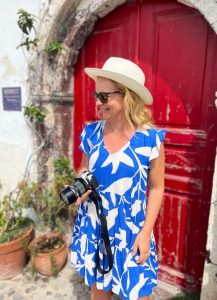
Deb Morrow is a wife and mum of two in her 50’s, who works in education. She has a passion for travel and through sharing her travel experiences, tips and recommendations, wants to encourage other women her age to start making time for themselves, grab their besties, and go see the world!